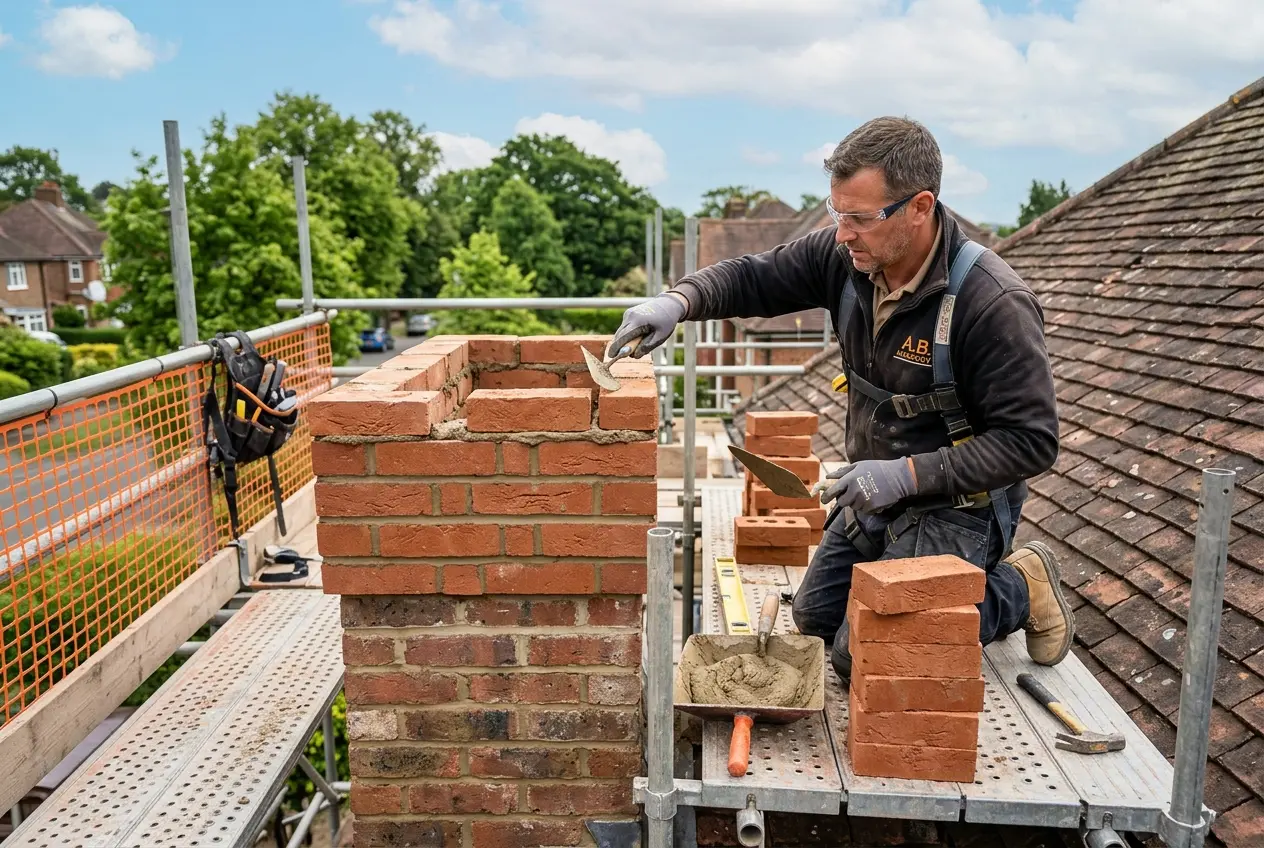
The average Philly chimney endures 60+ freeze-thaw cycles annually, causing cracked crowns and leaning stacks. We dismantle unstable chimneys from the top down, installing stainless steel liners and seismic reinforcement as we rebuild. For Victorian twins in West Philly, we replicate original corbeling and terra cotta flue tiles.
In Chestnut Hill’s stone homes, we use lime mortar that flexes with seasonal movement. Every rebuild includes a waterproof crown and proper flashing—the two most common failure points during our heavy nor’easters. We’ll also inspect adjacent roof penetrations since 70% of chimney leaks actually originate elsewhere.
In Chestnut Hill’s stone homes, we use lime mortar that flexes with seasonal movement. Every rebuild includes a waterproof crown and proper flashing—the two most common failure points during our heavy nor’easters. We’ll also inspect adjacent roof penetrations since 70% of chimney leaks actually originate elsewhere.
Our Process
- 01 Step 1: Drone inspection to assess lean and internal flue condition
- 02 Step 2: Install temporary bracing if structure is unstable
- 03 Step 3: Rebuild using Type N or S mortar (climate-dependent)
- 04 Step 4: Apply siloxane water repellent to resist driving rain
Benefits
- Eliminates fire hazards from cracked flues
- Prevents attic water damage during storms
- Maintains proper draft for efficient heating
- Adds curb appeal with clean brick lines
Frequently Asked Questions
Can you save my leaning chimney?
If it’s leaning less than 5 degrees, we can often straighten it with helical anchors. Beyond that, demolition is safer.
Why do crowns fail so quickly here?
Most are poured concrete—we form them from reinforced polymer-modified mortar that won’t crack when temperatures swing 50° in a day.
Do I need a permit?
Yes—we handle all Philadelphia L&I permits for chimney work exceeding $500 in value.