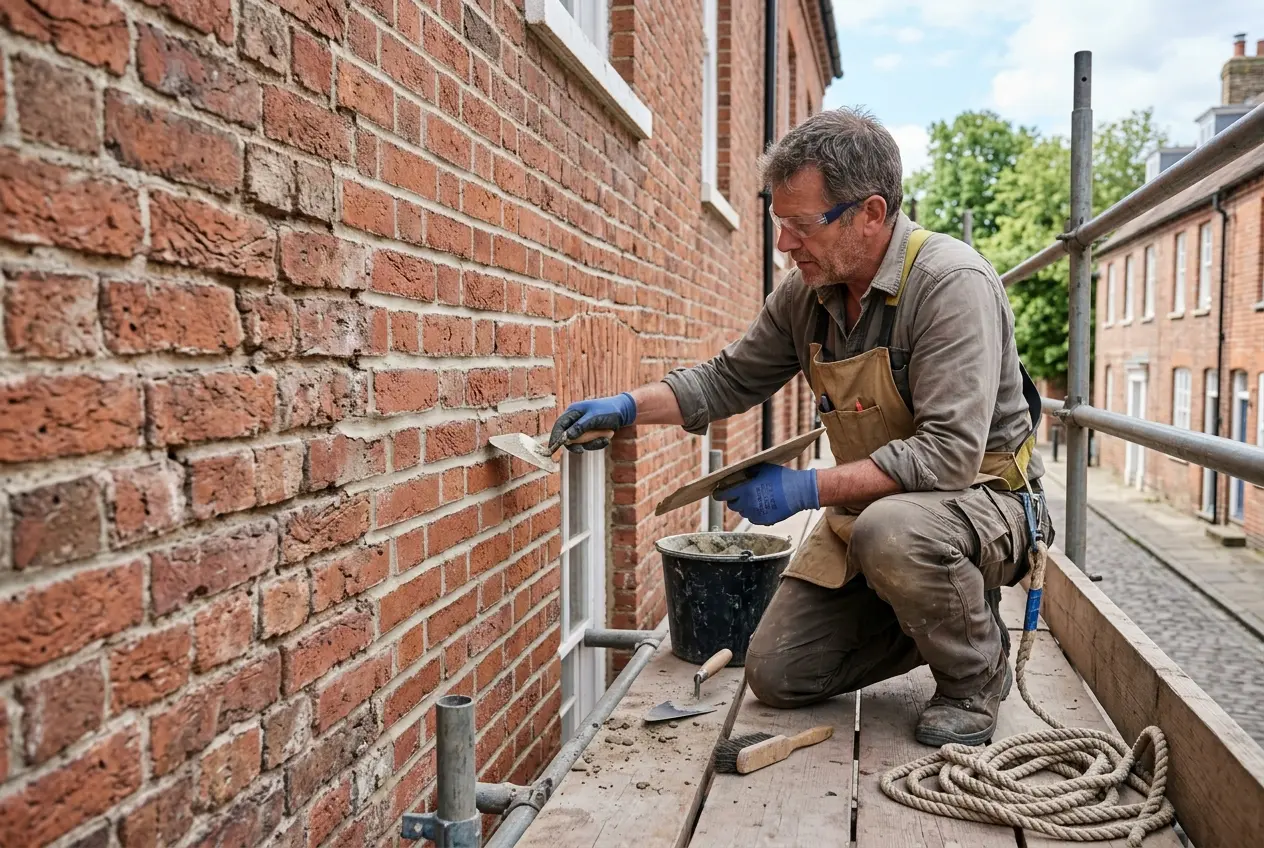
Philadelphia’s iconic row houses and commercial buildings suffer from spalling bricks, eroded mortar, and foundation shifts. We meticulously remove damaged brick using lime-based mortars that match original compositions, preserving structural integrity while meeting modern code requirements.
Our craftsmen replicate period-specific bonds like Flemish and Common for seamless repairs. For landmark properties near Independence Hall or Society Hill, we document every step for historical commission approvals. Freeze-thaw resistant additives in our mixes prevent repeat damage from Philly’s harsh winters.
Our craftsmen replicate period-specific bonds like Flemish and Common for seamless repairs. For landmark properties near Independence Hall or Society Hill, we document every step for historical commission approvals. Freeze-thaw resistant additives in our mixes prevent repeat damage from Philly’s harsh winters.
Our Process
- 01 Step 1: Laser scan facade to identify compromised areas and document original bond patterns
- 02 Step 2: Hand-remove damaged bricks using chisels and grinders to preserve adjacent units
- 03 Step 3: Custom blend mortar using local sand and pigments to match historic color and texture
- 04 Step 4: Rebuild structural wythes with stainless steel helical ties for added seismic resistance
Benefits
- Preserves property value in historic districts
- Reduces heat loss through deteriorated mortar joints
- Prevents water infiltration that damages interior walls
- Meets Philadelphia Historical Commission standards
Frequently Asked Questions
Will new brick stand out from original work?
We source reclaimed brick from local salvage yards and custom-tint mortar—most homeowners can’t spot the repairs.
How long does restored brick last?
Properly repointed brickwork typically lasts 30-50 years in Philly’s climate, versus 10-15 with cheap mortar.
Do you work with lead paint concerns?
Yes—we’re EPA Lead-Safe Certified and contain all dust during brick removal near painted surfaces.